A Guide to Rock Pooling in Australia: What to Find & Where to Go
A Guide to Rock Pooling in Australia: What to Find and Where to Go
Rock pooling is one of the most absorbing things you can do at the coast — and one of the most underrated. A falling tide on a rocky headland reveals an entire ecosystem: anemones, crabs, starfish, octopus, small fish, and hundreds of smaller creatures living in shallow pools of trapped seawater. You don't need any equipment, any expertise, or any particular fitness level. You just need to slow down and look.
Here's a guide to what you'll find, where to look, and how to do it without causing damage.
When to Go: Tides Are Everything
Rock pooling is a tidal activity. The best time to explore is on a falling or low tide — when the rocks are exposed and the pools are at their most accessible. A large tidal movement (spring tide) exposes more rock and more pools than a small tidal movement (neap tide).
Check tide times before you go. The Bureau of Meteorology publishes accurate tide predictions for hundreds of Australian coastal locations at bom.gov.au. Aim to arrive one to two hours before low tide, which gives you the maximum window of exposure time before the tide turns.
Rocky headlands and reef platforms are dangerous when the tide comes back in — particularly in swell. Keep an eye on the ocean, stay aware of waves, and never turn your back on the sea on an exposed platform.
What You'll Find in Australian Rock Pools
Crabs
The most common and easiest to spot. Shore crabs, spider crabs, and hermit crabs are all regular rock pool inhabitants. Hermit crabs — which live inside borrowed shells and drag them around — are a favourite for children. They're found in pools of all depths and are usually the first thing a child will notice.
Sea anemones
Attached to rocks and pool walls, sea anemones look like flowers when their tentacles are extended. Touch the water near them and the tentacles retract instantly. They're predators — the tentacles sting small prey and draw them into the central mouth — but the sting is not dangerous to humans. Common in pools across the country.
Starfish (sea stars)
Several species of sea star are found in Australian rock pools, from the small and camouflaged to the large and brightly coloured. They move very slowly and are often found in the lower pools that stay wet even at low tide. Do not remove them from the water — starfish exposed to air and sun deteriorate rapidly.
Octopus
One of the great rock pool finds. Small octopuses — the size of a fist — hide in crevices and under rocks, often perfectly camouflaged. They're best found by looking carefully into darker, deeper areas of the pool. If you see one, watch how it moves and changes colour when it realises it's been spotted.
Note: the blue-ringed octopus is found in Australian rock pools and is extremely venomous. It's small (golf-ball sized), brown in colour at rest, and displays vivid blue rings when threatened. Do not touch any small octopus in an Australian rock pool.
Sea urchins
Often found in deeper pools or in crevices at the pool's edge. Long-spined black urchins are the most common species in NSW and Queensland. They are painful to step on — wear water shoes in areas with heavy urchin populations.
Fish
Small fish — gobies, blennies, and juvenile versions of larger species — are common rock pool inhabitants. They're fast and well-camouflaged; the best way to see them is to stay still and let the pool settle after you've disturbed it.
Chitons, limpets, and periwinkles
Shellfish attached to rocks are everywhere in the intertidal zone. Limpets — the conical shells stuck firmly to rock surfaces — can remain above waterline for hours and survive exposure through a combination of shell clamping and mucus sealing. Chitons are flat, segmented shellfish that graze on algae. Periwinkles are small snails found at the top of the tidal zone.
Nudibranchs
Sea slugs — often extraordinarily colourful — are found in rock pools at low tide. They're small (1–5 cm typically), slow-moving, and easy to miss unless you're looking carefully. Finding one is a genuine rock pool highlight.
Kelp and algae
Rock pools support multiple species of seaweed and algae, from the bright green sea lettuce to brown kelp. Some species are soft and can be brushed against without harm; others have rough or calcareous surfaces. The algae in a pool is part of the ecosystem — it provides oxygen, food, and shelter for pool inhabitants.
The Best Rock Pooling Locations in Australia
Gordon's Bay, Sydney, NSW
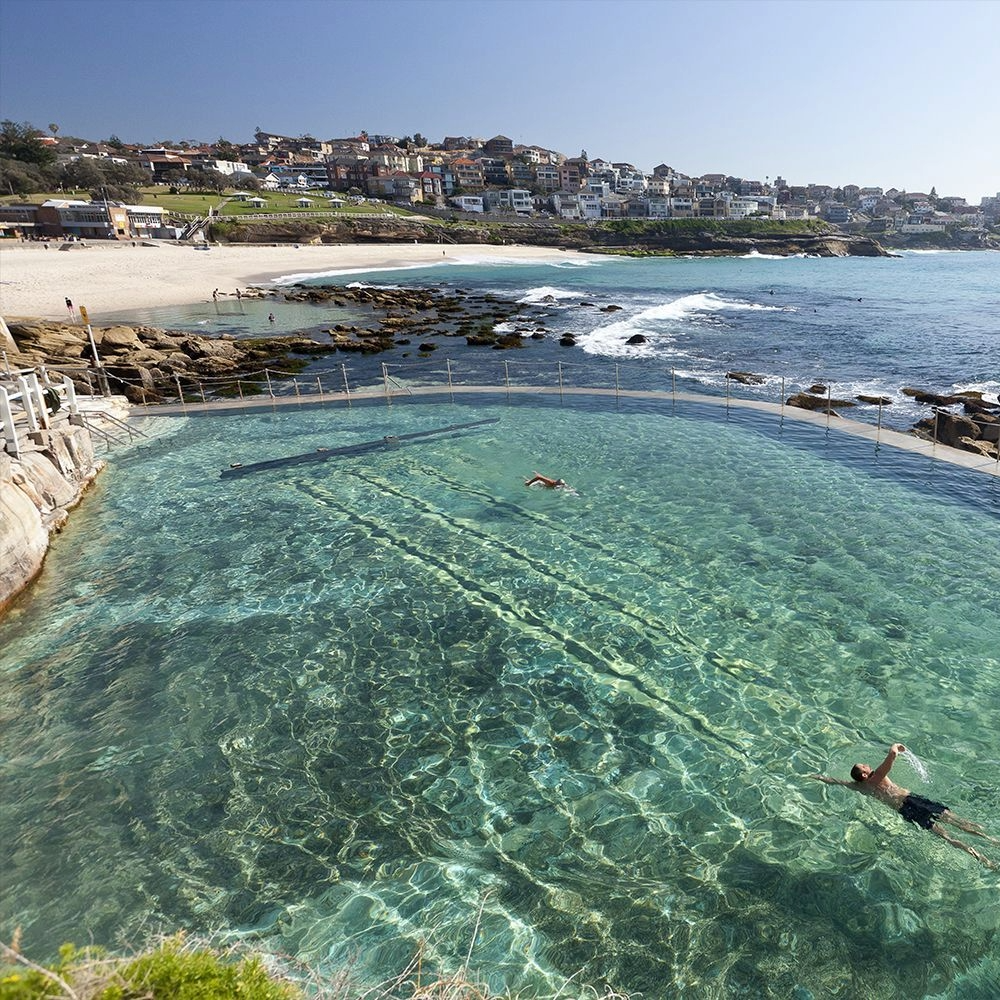
A small, protected cove between Coogee and Clovelly with excellent shallow reef and rock platforms exposed at low tide. The underwater nature trail here is the only one of its kind in NSW — a series of markers on the seabed for snorkellers and divers. The rock platforms on the southern side of the bay are excellent for pooling.
Bare Island, La Perouse, Sydney, NSW
A small island connected to the mainland by a footbridge. The rock platforms around the island are extensive and accessible at low tide. Marine protected status means the wildlife here is less disturbed than at more popular locations.
Shelly Beach, Manly, NSW
The protected cove at Shelly Beach — within a marine park — has excellent rock platforms on the southern headland. The marine park protection means species diversity and abundance are both high.
Point Addis, Surf Coast, VIC
Between Anglesea and Bells Beach on the Great Ocean Road, Point Addis has extensive rock platforms exposed at low tide. The platform reef here is accessible via a short walk from the car park and supports a diverse range of intertidal life.
Rye, Mornington Peninsula, VIC
The back beach at Rye has significant reef and rock platform exposure at low tide with good species diversity. Accessible and well-located for a combined day with other Mornington Peninsula activities.
Mettam's Pool, Trigg, WA
A natural rock pool just north of Perth — partially enclosed by a limestone reef and calm enough for children. Good snorkelling when the water is clear. The surrounding reef platform at low tide holds good rock pool species.
Snorkelling Rock, Victor Harbor, SA
A rock platform at the southern end of Victor Harbor beach with good low-tide exposure. Victor Harbor is one of the better rock pooling destinations in South Australia for accessibility and species diversity.
How to Rock Pool Without Causing Damage
Rock pool ecosystems are fragile. A few simple rules protect them:
Look, don't touch where possible. The most interesting rock pool experiences come from close observation, not handling. Most creatures are stressed by being picked up, and some are fragile enough to be damaged.
If you pick something up, put it back exactly where you found it. Returning a crab to the wrong pool or a starfish to a different rock can displace it from food sources and shelter it has adapted to.
Never take anything. Collecting shells, starfish, or other creatures from rock pools is harmful to the ecosystem and illegal in marine parks. Leave everything where you found it.
Watch your feet. Rock pool surfaces are home to limpets, chitons, and encrusting organisms that look like rock. Stepping on them kills them. Walk carefully on reef platforms and avoid stepping in shallow pools where possible.
Stay aware of the sea. Waves can wash over rock platforms quickly and without warning. Children should never be left unattended on reef platforms. Keep one eye on the ocean at all times.
What to Bring
Rock pooling requires minimal gear — the main additions to a regular beach kit are:
- Water shoes — reef platforms are uneven and can have urchins; footwear makes the whole experience more comfortable and safer
- A waterproof phone case — for photos at water level
- Sunscreen and a hat — you'll be bent over rock platforms in full sun, often without shade
A sand-free beach blanket is useful as a base between pool visits — somewhere clean and comfortable to put gear, eat lunch, and rest. The XO Beach Blanket pairs with a beach umbrella for shade on exposed headlands where natural shelter is limited.
Read more
Australia's best swimming spots — from protected harbour beaches and natural rock pools to freshwater swimming holes. A state-by-state guide to where to swim.
Rips, surf, UV, stingers, and marine hazards — a practical guide to staying safe at Australian beaches for locals and visitors alike.