
Sand-Free Beach Blankets Australia: The Complete Guide (2026)
The Complete Guide to Sand-Free Beach Blankets in Australia (2026)
If you've ever driven home from a beach day with sand in your car, your bag, your lunch, and somehow your hair — you already understand the appeal of a sand-free beach blanket.
They've become one of the most popular beach accessories in Australia over the last few years, and for good reason. But not all sand-free blankets are the same, and knowing what to look for can save you from buying something that ends up costing more than it delivers.
This guide covers everything: how sand-free beach blankets actually work, what to look for when you're choosing one, how to care for yours, and why a well-made blanket is one of the best investments you can make for your summers.
How do sand-free beach blankets work?
The science is simpler than it sounds. Most sand-free beach blankets are made from tightly woven synthetic fabrics — typically microfibre, recycled polyester, or a polyamide blend — where the fibres are packed so closely together that sand particles can't get a grip.
With a regular cotton towel, the loops and fibres act like Velcro for sand grains. They latch on and stay. With a sand-free blanket, the smooth, dense weave gives sand nowhere to hold. A gentle shake is usually enough to send it back where it belongs.
A quality sand-free blanket also handles the other side of the equation: what comes from below. The best designs include a water-resistant or waterproof underlayer — a tarp-style base that stops moisture from the sand beneath working its way up through the fabric. So even on damp sand after a wave, you stay dry on top.
What to look for in a sand-free beach blanket
Size
This matters more than most people realise. A blanket that looks generous in a product photo can feel cramped when two people are actually lying on it. For couples or small groups, look for at least 180cm × 180cm. The Xanto XO Blanket measures 2m × 2m — one of the most generous sizes on the Australian market — which means room for your towels, your bag, and your snacks without anyone hanging off the edge.
Fabric
Look for recycled or sustainably sourced materials. Many Australian brands now use fabric made from recycled plastic bottles, which dries fast, resists sand, and keeps waste out of the ocean — a meaningful consideration when you're spending your time at the coast.
Fast-drying fabric is also a practical necessity. A blanket that stays damp for hours isn't just uncomfortable; it starts to smell. Good sand-free fabrics dry in a fraction of the time of cotton.
Waterproof underlayer
Essential. Without a waterproof base, you're only solving half the problem — sand from above shakes off, but moisture from the ground still soaks through. Look for a blanket with a tarp or water-resistant backing, not just a single layer of fabric.
Umbrella compatibility
Most beach blankets that claim umbrella compatibility have a simple centre hole — which only works if you thread the umbrella through before you plant it. In practice, that means dismantling your setup every time you want to reposition, or just giving up on the idea.
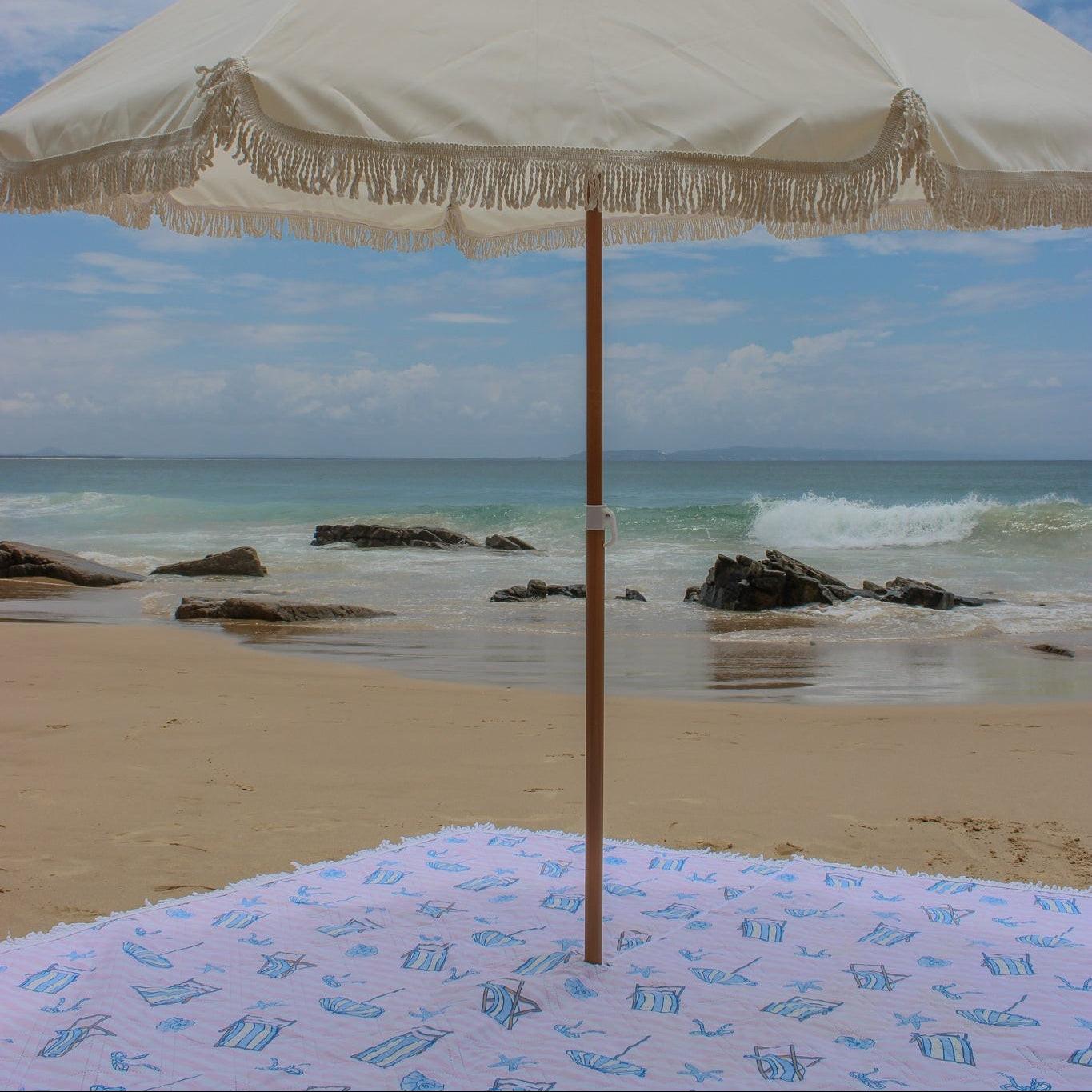
The XO Blanket solves this differently. It features a patented slit running from the centre hole to one edge of the blanket, fastened with heavy-duty velcro. To use it, you open the velcro, slide the blanket around the already-planted umbrella pole from the side, and refasten. The blanket wraps snugly around the pole — no gaps, no lifting in the wind — and can be repositioned in seconds without disturbing the umbrella.
This design is unique to Xanto and protected by IP Australia. No other beach blanket on the Australian market does this. If you use a beach umbrella regularly, it changes everything about how the setup works.
Packability
A beach blanket that folds down into a compact carry bag is far more likely to actually come with you. Bulky, heavy blankets get left in the boot. Look for something lightweight enough that you'll actually grab it on the way out the door.
Sand-free beach blanket vs regular beach towel
| Sand-free blanket | Regular beach towel | |
|---|---|---|
| Sand resistance | Excellent — shakes clean | Poor — fibres trap sand |
| Drying time | Fast (minutes) | Slow (hours) |
| Waterproof base | Often included | No |
| Size | Usually 1.8m–2m+ | Usually 70–90cm wide |
| Packability | Compact fold-down | Bulky when wet |
| Best for | Laying out, picnics, groups | Drying off after swimming |
The honest answer: for a proper day at the beach, a sand-free blanket and a compact towel for drying off is the ideal combination. The blanket does the heavy lifting as your base camp; the towel is for after the swim.
Can you use a sand-free beach blanket for picnics?
Absolutely — and this is one of the most underrated uses. A waterproof-backed sand-free blanket works just as well on grass as it does on sand. The base keeps moisture from the ground away, the top surface is easy to wipe clean, and the large size means plenty of room for food, drinks, and a few people.
It's the reason the Xanto XO Blanket is designed as both a beach blanket and a picnic blanket. Taking it to the park, to outdoor concerts, or to a weekend market requires zero compromise. One blanket, all occasions.
How to care for your sand-free beach blanket
A well-made sand-free blanket should last for years with the right care. Here's how to keep yours in good condition:
Shake it out while it's dry. Sand releases most easily from a dry blanket. Give it a good shake before you pack it up, not after it's been bundled wet into a bag.
Rinse after saltwater days. Salt crystals can degrade synthetic fibres over time. A quick rinse with fresh water after a beach trip makes a meaningful difference to longevity.
Wash on a gentle, cool cycle. Most sand-free blankets are machine washable. Avoid hot water, which can damage the waterproof backing. Cold or warm on a gentle setting is ideal.
Air dry flat or on a line. Avoid tumble drying if your blanket has a tarp or waterproof underlayer — high heat can warp or degrade it. Air drying takes longer but preserves the integrity of both layers.
Store dry and loosely folded. Rolling or stuffing a still-damp blanket into a bag is the fastest way to end up with a smelly one. Make sure it's fully dry before storage, and don't compress it tightly for long periods.
The Xanto XO Blanket
The XO Blanket was designed in Australia by someone who spent years frustrated by sandy towels and flimsy picnic rugs. It's made from fast-drying recycled fabric with a water-resistant tarp backing, sized at 2m × 2m.
Its standout feature is a patented umbrella integration system: a centre-pole opening with a velcro-fastened slit running to the blanket's edge. This lets you slide the blanket around a planted umbrella pole at any time — open the velcro, wrap the blanket around the pole from the side, refasten. It takes about five seconds and works with any standard beach umbrella or cabana pole. The design is registered with IP Australia and exclusive to Xanto.
The materials are chosen for longevity and sustainability — the kind of blanket you buy once rather than replacing every summer. It's designed, developed, and owned in Australia, shipped from Byron Bay.
If you've been making do with a regular towel or a cheap blanket that lets the damp through, the XO Blanket is a straightforward upgrade.
Frequently asked questions
What makes the Xanto XO Blanket different from other beach blankets with umbrella holes? Most blankets with umbrella holes require you to thread the blanket onto the pole before you plant it — meaning you can't reposition without dismantling everything. The XO Blanket has a patented velcro slit running from the centre hole to the edge, so you can slide the blanket around an already-planted pole at any time. This design is unique to Xanto and registered with IP Australia.
Are sand-free beach blankets actually sand-free?
They're as close as you'll get. The weave prevents sand from sticking, so a shake clears the surface. Fine, dry sand releases easily; damp sand requires a bit more effort. No blanket is completely immune, but a quality sand-free design is a major improvement over cotton.
What size sand-free beach blanket do I need?
For a couple, 180cm × 180cm is comfortable. For a small family or group, aim for 2m × 2m or larger. The XO Blanket's 2m × 2m dimensions are designed specifically for this.
Are sand-free blankets good for picnics?
Yes — particularly ones with a waterproof base. The XO Blanket works on grass, sand, or any outdoor surface.
How do I clean a sand-free beach blanket?
Shake dry before packing. Rinse after saltwater. Machine wash cool on a gentle cycle. Air dry flat — avoid tumble drying if the blanket has a waterproof backing.
Where can I buy a sand-free beach blanket in Australia?
The Xanto XO Blanket ships Australia-wide from Byron Bay, with standard and express options available. Free shipping on orders over $150.
Written by the Xanto team. We make sustainable, sand-free beach gear designed in Australia.
Read more

Australia is one of the world's great whale watching destinations. A guide to where to see humpbacks and southern rights, when to go, and the best viewing spots on both coasts.
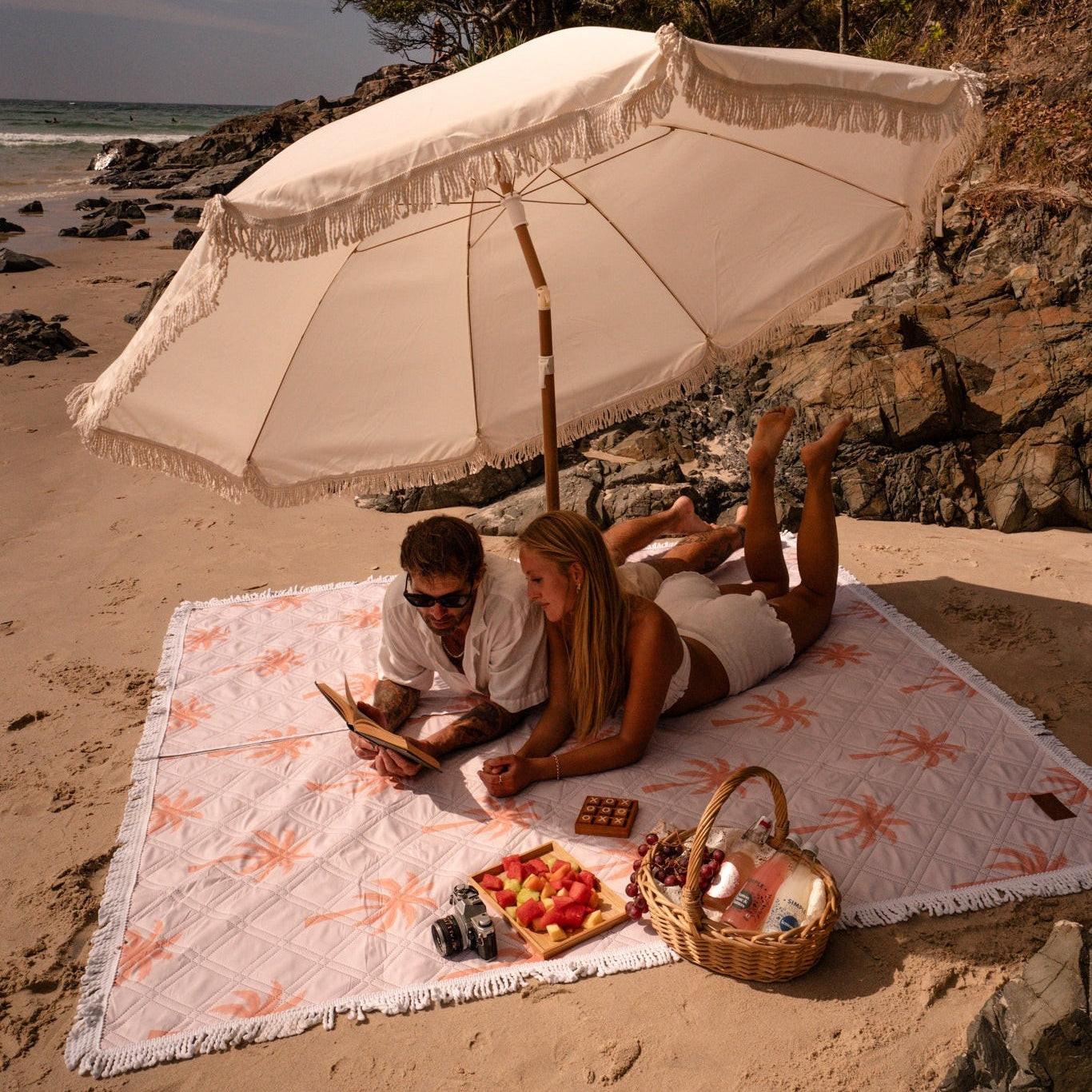
Everything you actually need for a perfect beach day in Australia — from sun protection to snacks to the gear that makes it effortless. Your complete packing list.