
The Ultimate Beach Day Packing List for Australians (2026)
The Ultimate Beach Day Packing List for Australians (2026)
There's a version of a beach day where everything goes smoothly — you have shade when you want it, somewhere dry to sit, snacks that don't taste like salt, and you drive home without half the beach in your car.
And then there's the version where you forget the sunscreen, sit on a wet towel for three hours, and find sand in your sandwich.
The difference is mostly preparation. After a lot of both kinds of days, here's the packing list we'd hand to anyone heading to an Australian beach.
The essentials (don't leave without these)
A sand-free beach blanket
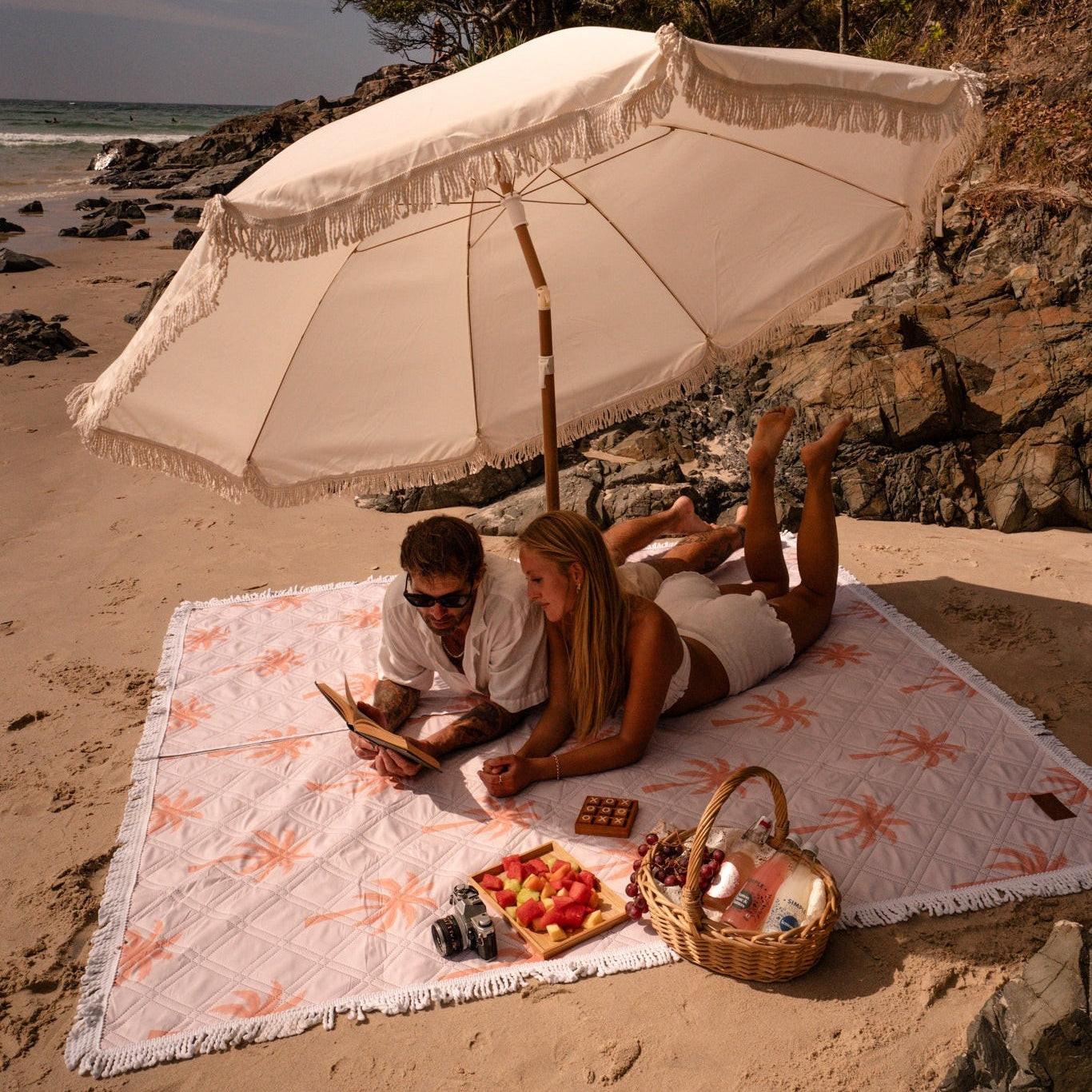
This is the single most impactful upgrade to a beach day. A quality sand-free blanket — made from tightly woven synthetic fabric with a waterproof base — gives you a dry, clean spot to settle in for the day. Sand shakes off rather than embedding itself in the weave, and the waterproof underlayer means damp sand doesn't seep up from below.
The Xanto XO Blanket is 2m × 2m, which is large enough for a couple or a small group, and includes a centre-pole opening for a beach umbrella so everything sits together rather than awkwardly apart. It packs down small and comes in a carry bag, so it takes up almost no room in your tote.
If you're currently bringing a regular beach towel as your sitting surface, this is the one swap worth making.
Sunscreen — more than you think you need
Australia has some of the highest UV index readings in the world, and SPF 50+ is the standard here for good reason. Bring more than one bottle if you're staying more than a couple of hours — reapplying every two hours is the actual recommendation, not the one people follow but the one that matters.
Reef-safe formulations are worth choosing, especially if you're swimming near any coastal reef or rock system.
After-sun care
Australian sun is strong enough that even a careful day can leave your skin feeling dry, tight, or slightly pink by evening. An after-sun oil — not a lotion — absorbs quickly and helps restore what UV exposure takes out. The Xanto After Sun Oil is made in Australia and designed specifically for post-beach skin recovery. Worth keeping in your bag alongside the SPF rather than leaving it at home for later.
Sunglasses
Polarised lenses cut through glare off the water significantly. UV protection for your eyes is a genuine health consideration, and squinting all day makes for a less enjoyable time.
A hat
Wide-brimmed for the most protection. Caps are fine for the face but leave your neck and ears exposed, which tend to be where Australians get caught out most. A packable straw hat folds flat in a bag and earns its place every time.
Water and food
Water — 1 litre per person minimum, more in summer
Dehydration happens faster at the beach than most people expect. Sun, saltwater, and heat all accelerate it. Two litres per person for a full day is more realistic than one. An insulated water bottle keeps things cold for hours.
Snacks that survive heat
The beach is hostile to food that melts, spoils quickly, or falls apart on contact with sand and salt air. Things that travel well: grapes and berries in a sealed container, nuts, crackers with hard cheese, cut vegetables with dip, pre-made wraps. Things that don't travel well: chocolate, anything with soft icing, anything with a lot of mayo.
A small soft cooler bag with an ice pack extends the window significantly.
A reusable bag for rubbish
Australian beaches are worth protecting. A small drawstring bag lives in your tote and gives you somewhere to put rubbish until you find a bin.
Comfort and shade
A beach umbrella
In direct Australian summer sun, shade stops being optional fairly quickly. A good beach umbrella anchors into the sand and gives you a retreat when the heat becomes too much. Look for UPF 50+ fabric rather than just a regular shade umbrella.
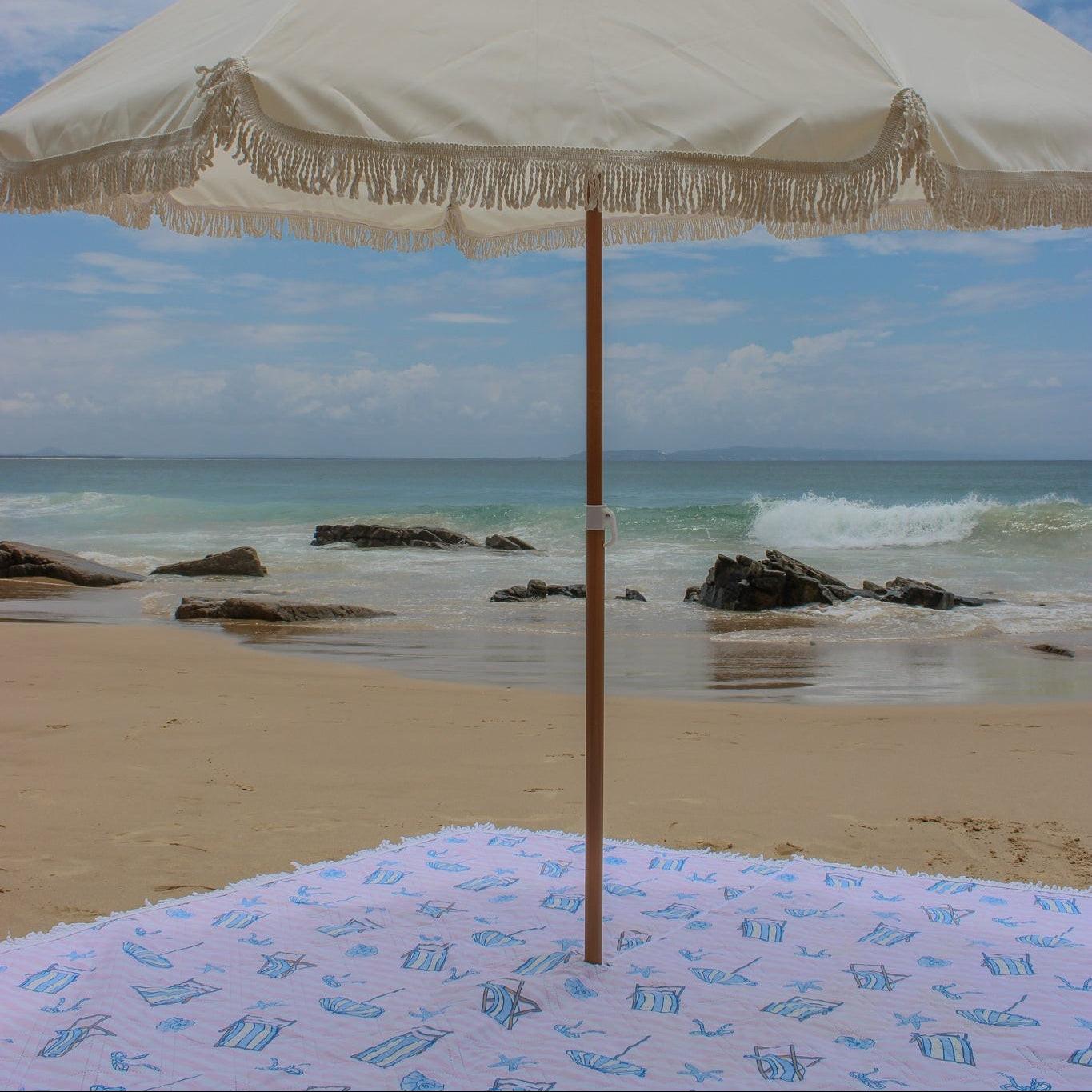
The XO Blanket's umbrella integration is worth understanding here: rather than just a hole in the centre that requires threading the blanket onto the pole before planting, it uses a patented velcro slit running from the centre hole to the edge. You plant the umbrella, lay the blanket, then open the velcro and slide the blanket around the pole from the side. Refasten, and everything locks together. It's a five-second move and means your umbrella and blanket work as one unit regardless of the order you set them up. This design is unique to Xanto and protected by IP Australia.
Dry clothes for after
The transition from beach to car or cafe is more comfortable with dry clothes to change into. A simple cotton t-shirt and shorts adds almost nothing to your bag and changes the end of the day significantly.
Swimming and water
Rash vest or swim shirt
Particularly for long swims or snorkelling. A good rash vest provides UPF 50+ sun protection across the back and shoulders, where sunscreen application tends to be uneven.
Waterproof bag or dry bag for valuables
Keys, phone, and wallet need somewhere safe when you're in the water. A small dry bag rolls up to almost nothing in your tote.
Snorkelling gear (if relevant)
If you're heading somewhere with clear water worth exploring — rock shelves around Sydney, the Great Barrier Reef, or anywhere along the Ningaloo Coast — fins and a mask repay the bag space immediately.
Keeping things clean and easy
A small microfibre towel for drying off
Separate from your beach blanket. A microfibre towel dries in minutes, packs down small, and stays fresher longer than cotton.
Wet bag for damp things
Wet bathers and towels going home in a bag with everything else is the fastest route to a mouldy bag. A simple waterproof pouch keeps wet things contained.
Baby powder
Sounds strange, works remarkably well. Dust it on sandy skin before brushing — the powder absorbs moisture and the sand comes off cleanly without scrubbing.
Hand sanitiser or wipes
For before eating, or any moment when a tap isn't available.
Optional but worth it
A good book or Kindle — the beach is one of the few places it's genuinely acceptable to do nothing else for hours.
A portable Bluetooth speaker — a small waterproof one (IPX7 rated) adds a lot to a long day.
Reef shoes — for rocky entries or areas where sea urchins are common.
A beach cart — if you're going with young kids or a group, a fold-up trolley means one trip from the car rather than four.
A frisbee or cricket set — the classics persist because they work.
The full checklist
Sun protection
- [ ] SPF 50+ sunscreen (plus a spare)
- [ ] After-sun oil
- [ ] Wide-brim hat
- [ ] Polarised sunglasses
- [ ] Rash vest
Base camp
- [ ] Sand-free beach blanket (XO Blanket)
- [ ] Beach umbrella
- [ ] Small pillow or rolled towel
Water and food
- [ ] Water (1–2 litres per person)
- [ ] Snacks in sealed containers
- [ ] Small cooler bag with ice pack
- [ ] Reusable rubbish bag
Swimming
- [ ] Bathers
- [ ] Dry clothes for after
- [ ] Microfibre towel
- [ ] Dry bag for phone and keys
- [ ] Snorkel gear (optional)
Clean-up
- [ ] Wet bag for damp things
- [ ] Baby powder
- [ ] Hand sanitiser or wipes
Build a permanent beach bag
The easiest way to ensure you always have the right gear is to keep a dedicated beach bag stocked and ready. Leave the sunscreen, wipes, dry bag, and reusable rubbish bag inside it permanently. Add the blanket, food, and water before you leave. You'll spend less time packing and far fewer beach days will end with "I wish I'd brought..."
The XO Blanket lives in its own carry bag, which sits at the bottom of your beach tote between trips, ready to go.
A note on Australian conditions
A few things specific to beach days in Australia that don't apply everywhere:
UV is high year-round in northern states. Queensland, WA, and the NT have elevated UV even in winter. Sun protection is worth keeping up beyond summer.
Bluebottles wash up on east coast beaches, particularly after nor'easters. Check the water before swimming and avoid bright blue jellyfish on the sand. If stung, don't rub — rinse with seawater and apply heat.
Rips and currents. Always swim between the flags at patrolled beaches. If caught in a rip, don't swim against it — swim parallel to shore until you're clear of it, then return.
Leave no trace. Pack out everything you brought. The Australian coastline is genuinely extraordinary and easy to take for granted.
Designed in Australia, for Australian beach days. The Xanto XO Beach & Picnic Blanket, After Sun Oil, and beach accessories are available at xanto.com.au.
Read more
Everything you need to know about sand-free beach blankets in Australia — how they work, what to look for, how to care for them, and why the Xanto XO Blanket is worth it.
Looking for the perfect gift for someone who lives for the beach? Here are the best coastal gifts in Australia for every budget — from stocking fillers to standout presents.