
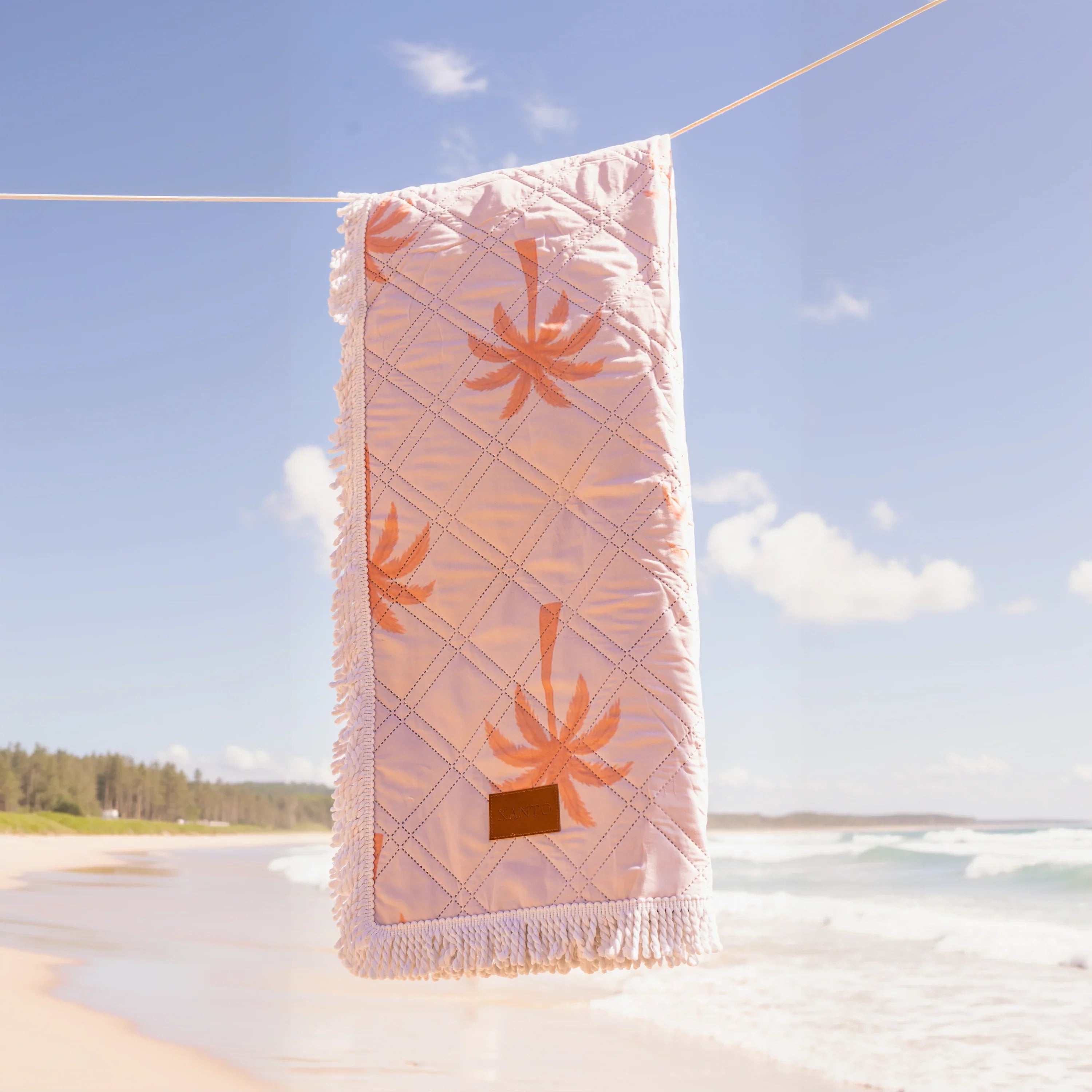
Beach Blanket vs Beach Towel: What's the Difference? (Australia 2026)
Beach Blanket vs Beach Towel — Which One Do You Actually Need?
If you've looked at a sand-free beach blanket and wondered whether it replaces your beach towel, or whether you actually need both, you're asking the right question.
The honest answer: they do different things, and understanding the difference makes your beach bag a lot more efficient.
What a beach towel does well
A beach towel is optimised for one thing: drying you off after a swim. A thick, absorbent towel — cotton or microfibre — soaks up water quickly and does that job well.
It also works as a body cover while you dry off, a wrap while you walk back from the water, or a mat to stand on while you change. These are real, useful functions.
What it doesn't do well: act as a base camp. A regular beach towel sits on sand, collects sand in every loop of the weave, and transfers that sand to you every time you sit back down. If the sand is damp, moisture works up through the towel. In direct sun, a thin cotton towel gives you effectively no insulation from the heat of the sand beneath it.
It's designed for drying. Using it as a lying surface for hours is asking it to do something it wasn't built for.
What a sand-free beach blanket does well
A sand-free beach blanket is optimised for being your base on the beach. It's large — the Xanto XO Blanket is 2m × 2m, versus a standard 70cm × 140cm beach towel — and it's designed to be the thing you lay everything on, sit on, eat on, and spend your day on.
The tightly woven synthetic fabric repels sand rather than trapping it. A shake clears the surface. The water-resistant backing stops moisture from the sand below working its way up. In direct sun, the layered construction keeps you off the hot sand.
It's also made for sharing. Two people on a single beach blanket designed for two people is comfortable. Two people on a single beach towel isn't.
Where a sand-free blanket falls short: it's not made for aggressive towelling-off. The fabric isn't particularly absorbent, and that's by design — the same tight weave that repels sand doesn't soak up water the way cotton loops do.
Head to head
| Sand-free beach blanket | Regular beach towel | |
|---|---|---|
| Sand resistance | Excellent — shakes clean | Poor — fibres trap and hold sand |
| Stays dry from below | Yes (waterproof backing) | No |
| Size | Large (1.8m–2m+) | Compact (70–90cm wide) |
| Good for drying off | No — not absorbent enough | Yes — that's what it's for |
| Shares comfortably | Yes (designed for 2+) | No |
| Packs down small | Yes | Bulky when wet |
| Works as picnic blanket | Yes | Poorly |
| Price | Higher upfront | Lower upfront |
The real question: do you need both?
For a typical Australian beach day, the ideal setup is actually both — used for the things each is good at.
A large sand-free blanket as your base. A compact microfibre towel (not a full-size cotton one) per person for drying off after swims. The microfibre towel packs to almost nothing and dries in minutes, so it adds very little to your bag. The blanket does the heavy lifting as your all-day spot.
This combination is lighter, more functional, and less sandy than bringing a pile of regular beach towels and using them for everything.
When a beach towel alone is fine
If you're heading to the beach for a quick swim — in and out, no lying around, no picnic — a good towel is all you need. The setup cost of a blanket only makes sense if you're staying long enough to appreciate it.
Similarly, if you're going to a very well-maintained beach with clean, fine, dry sand and you genuinely only need it for drying off, a towel gets the job done.
When a beach blanket is clearly the better choice
You're staying for more than a couple of hours. You're going with another person or a family. You want to eat, read, or genuinely relax on the beach rather than just swim and leave. The sand is damp, it's been rough, or the beach is crowded and space matters.
In most Australian summer beach scenarios — particularly with kids — a sand-free blanket isn't a luxury. It's the more practical piece of gear.
What about microfibre beach towels marketed as "sand-free"?
This is a genuine grey area worth clarifying.
Many brands sell "sand-free beach towels" — these are typically microfibre towels with a tighter weave than traditional cotton. They do repel sand better than cotton. They're good for drying off and significantly better than regular towels for not tracking sand everywhere.
What they aren't: a replacement for a dedicated beach blanket. They're typically too narrow to lie on comfortably with another person, and they usually don't have a waterproof backing, so moisture still seeps up from the sand below.
The XO Blanket is in a different category — it's a sit-on-all-day surface, not a towel that happens to shake clean.
The bottom line
For a proper beach day in Australia, the best setup is a sand-free beach blanket plus one compact microfibre towel per person for drying off. It's lighter than a pile of cotton towels, cleaner, more comfortable, and more functional.
If you're only going to the beach for a swim, a good towel is enough.
If you're going to spend the day there — eating, reading, watching the kids, actually enjoying being at the beach — the blanket is worth it.
The Xanto XO Blanket is 2m × 2m with a waterproof backing, made from recycled fabric, and designed in Australia for exactly this kind of day. It also features a patented velcro slit running from the centre umbrella hole to the blanket's edge — meaning you can slide it around an already-planted umbrella pole at any time without dismantling your setup. That design is unique to Xanto and registered with IP Australia.
Questions? Reach us at shop@xanto.com.au. We ship Australia-wide from Byron Bay.
Read more
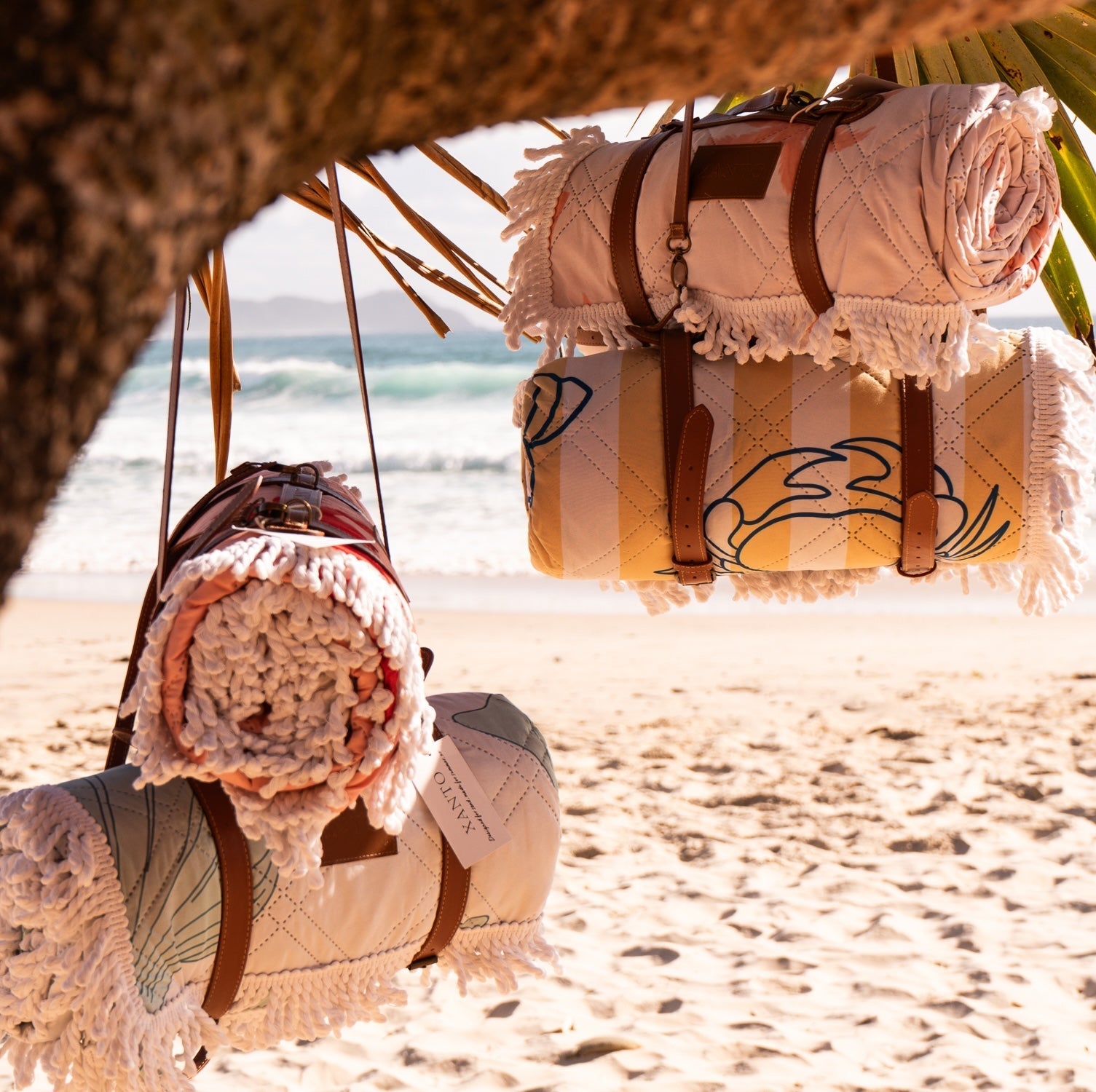
Looking for the perfect gift for someone who lives for the beach? Here are the best coastal gifts in Australia for every budget — from stocking fillers to standout presents.
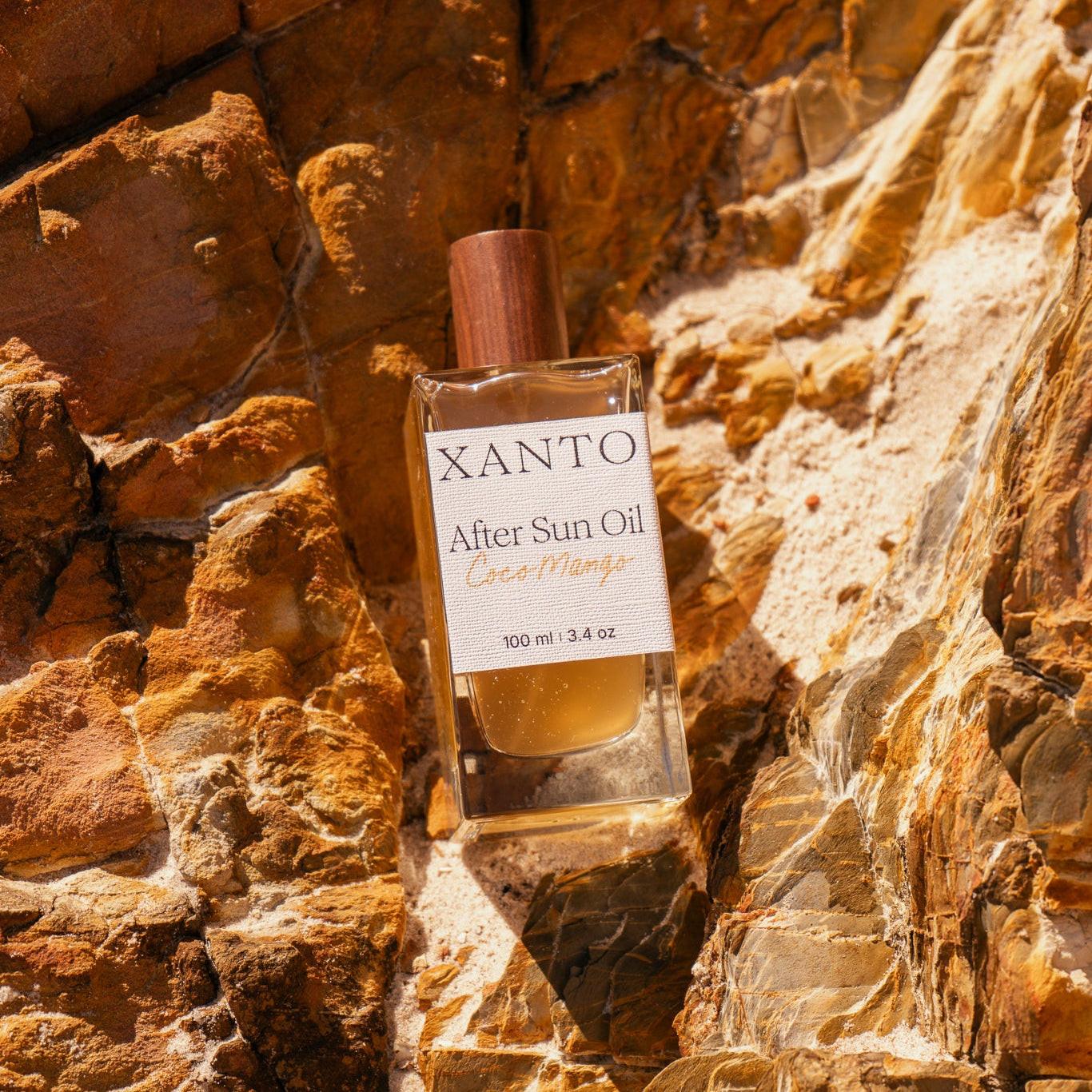
Discover why after sun oil is essential after a day at the beach. What ingredients to look for, how to apply it, and what to avoid for healthy summer skin.