
Byron Bay Travel Guide: Beaches, Things to Do & Where to Stay
Byron Bay Travel Guide: Australia's Most Iconic Coastal Town
Byron Bay is one of those places that earns its reputation. The combination of world-class beaches, a relaxed pace, the Cape Byron headland, and the kind of light that makes everything look like it was shot on film has made it a destination unlike anywhere else in Australia. It's also, for the record, where Xanto is based — so we know it well.
Here's everything you need to plan a trip.
Getting There
Byron Bay sits on the far north coast of New South Wales, about 180 kilometres south of Brisbane and 780 kilometres north of Sydney.
From Brisbane: 2.5 hours by car via the Pacific Motorway. The most common approach for most visitors.
From Sydney: A long day's drive (8–9 hours) or a short flight into Ballina-Byron Gateway Airport (30 minutes from Byron). Ballina is the most convenient airport; Gold Coast Airport (Coolangatta) is another option, about 1.5 hours away.
By train: Countrylink runs services to Casino, with a connecting coach to Byron Bay. Slower, but scenic and stress-free.
When to Go
Byron Bay is genuinely good year-round, but the seasons are distinct.
Summer (December–February): Hot, humid, and busy. School holiday crowds peak in January. The beaches are at their best but accommodation books out months in advance. Afternoon thunderstorms are common.
Autumn (March–May): The sweet spot. Crowds thin, weather stays warm, and the water temperature peaks after a full summer of heating. March and April are arguably the best months to visit.
Winter (June–August): Mild and dry, with daily temperatures still reaching the low 20s. Whale season runs June to November, with humpbacks regularly spotted from the Cape Byron lighthouse. Quieter, less expensive, and genuinely beautiful.
Spring (September–November): Warming up, good surf, and increasing crowds ahead of summer. Wildflowers in the hinterland. Another excellent window.
The Beaches
Main Beach
The long arc of sand running west from the Byron township. Good for swimming, learner surfing, and long walks. Patrolled by surf lifesavers during peak hours.
Wategos Beach
The jewel of Byron. Tucked on the northern face of the Cape Byron headland, Wategos is sheltered, north-facing, and one of the most beautiful small beaches in Australia. It gets morning sun all day, the water is usually calmer than Main Beach, and the surrounding headland is national park. It fills up on weekends — go early.
The Pass
Adjacent to Wategos, The Pass is one of the most famous right-hand point breaks on the east coast. Even if you don't surf, watching the long walls peel along the headland on a good swell is worth the walk.
Belongil Beach
West of the town centre, Belongil is the quiet alternative. Long, rarely crowded, and backed by low dunes. Unofficial dog-friendly sections make it popular with locals. Check flags — there are sections without patrol.
Tallows Beach
South of the lighthouse and the cape, Tallows is 6 kilometres of largely deserted beach extending to the Arakwal National Park. The trade-off for the space and solitude is a more exposed shoreline — better for walking than swimming.
Suffolk Park Beach
South of Byron, Suffolk Park is where locals go when Main Beach is too busy. A long stretch of good surf beach, reliable swell, and significantly fewer people.
Things to Do
Walk the Cape Byron Lighthouse Track
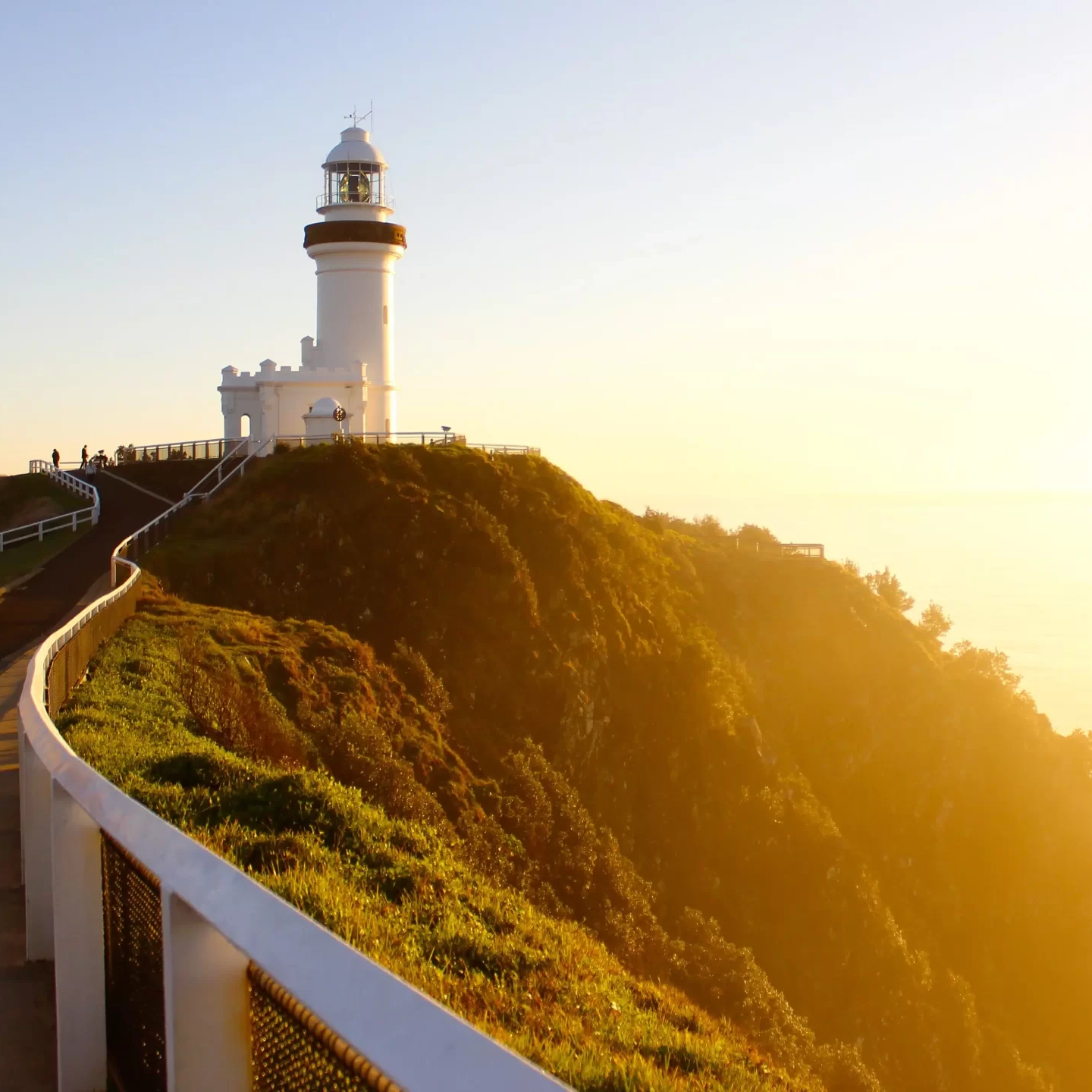
The 3.7-kilometre loop around the Cape Byron headland is one of the best short coastal walks in Australia. The lighthouse, built in 1901, sits at the easternmost point of the Australian mainland. The views — north to the Gold Coast hinterland, south along the coast, out to the Pacific — are extraordinary. Dolphins are visible from the headland almost daily; from June to November, migrating humpback whales are a regular sight.
Surf
Byron is a surf town at its core. The Pass and Wategos suit intermediate to advanced surfers on most days. Cosy Corner, just south of Wategos, is more forgiving for beginners. Multiple surf schools operate out of Main Beach — Blackdog Surfing and Let's Go Surfing are well-regarded.
Visit the Byron Bay Farmers Market
Thursday mornings at the Butler Street Reserve. Local produce, coffee, baked goods, and the full range of Byron Bay food culture. One of the better regional farmers markets in NSW.
Explore the hinterland
The Byron hinterland — Bangalow, Mullumbimby, the Nightcap National Park, Minyon Falls — is as much a reason to visit as the beaches themselves. The 45-minute drive up to the Minyon Falls lookout and the rainforest walk to the base is one of the better short hikes in the region.
Byron Bay Wildlife Sanctuary
A genuine wildlife sanctuary rather than a tourist park. Koalas, kangaroos, wallabies, and native birds in a natural setting. Good for families and for visitors who want to see Australian wildlife up close.
Markets
Byron has multiple weekly markets. The Byron Bay Community Market (first Sunday of the month at Butler Street) and the Artisan Market (third Sunday, same location) are the most established. The Mullumbimby Farmers Market (Friday mornings) and the Bangalow Farmers Market (Saturday mornings) are worth the short drive inland.
Where to Eat
Byron's food scene punches well above its size.
Fleet — Small, reservation-only, and consistently one of the best restaurants in regional NSW. The menu changes constantly; the cooking is technically serious without being pretentious.
Bayleaf Café — The local institution for breakfast. Busy, relaxed, and consistently good. The acai bowls and the breakfast burritos are both worth ordering.
The Byron Bay General Store — A good all-day café on Lawson Street with solid coffee, fresh food, and a covered courtyard. Less crowded than the main strip.
Roadhouse Byron Bay — Great coffee, good food, and a well-curated bottle shop. The smashed avo on sourdough is not a cliché here; it's actually excellent.
Balcony Bar & Oyster Co — For late afternoon drinks and fresh oysters overlooking Jonson Street. The right place at the right time of day.
Where to Stay
The Byron at Byron — The most established luxury option. Set in the rainforest behind Tallow Beach, the suites are spacious and the pool is exceptional. A short drive from town but worth it for the setting.
Raes on Wategos — Boutique hotel right on Wategos Beach. Arguably the best location of any accommodation in Byron. Book well in advance.
Atlantic Byron Bay — Mid-range, central, and consistently well-reviewed. Walking distance to Main Beach and the town centre.
Camping — Clarke's Beach Holiday Park — For budget travellers or families, the Clarke's Beach Holiday Park is well-located and well-run. Beachfront sites book out early in summer.
Practical Notes
- Parking is genuinely difficult in peak season. Use the free shuttle from the Byron Bay Transit Centre or walk — the town is small enough to cover on foot.
- Accommodation books out months in advance for December–January and Easter. Plan early.
- UV is extreme in summer — bring high SPF sunscreen, a proper hat, and a beach umbrella. See our sun safety guide for the full breakdown.
- Beach setup matters more at Byron than most places — the combination of fine sand and full-day beach culture means a proper sand-free blanket and a well-anchored umbrella makes a significant difference to your day.
The XO Beach Blanket ships from Byron Bay — it's designed for exactly the kind of long, sun-drenched beach days this town is famous for.
Read more

Australia has some of the world's highest UV levels. A practical guide to sun safety — sunscreen, clothing, timing, and after-sun care — for beach days and beyond.
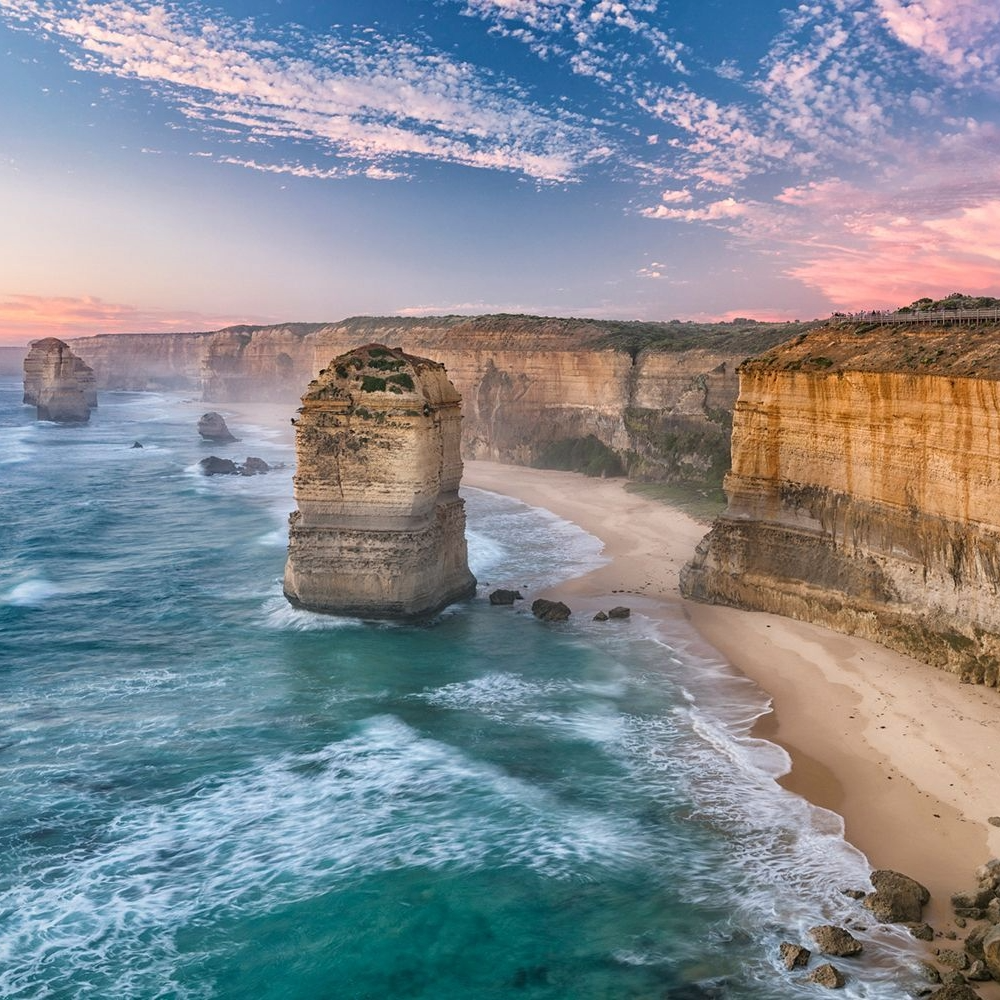
From the Great Ocean Road to the Coral Coast — a guide to Australia's best coastal road trips, what to see, and how to make the most of time on the road.